
We supply pre-cut cap lining material for clients who cannot find cap suppliers with the cap and cap lining combination they need.
Author: admin
Roll Form Cap Lining

Roll Form Cap Lining Material is supplied to our clients that use Liner Insertion Machines and it can also be supplied clients that are using Capless Induction Sealing Equipment that is roll fed. Usually our clients are dedicated caps and closures manufacturers or importers. There is a growing trend for some of the higher volume FMCG manufacturers to bring cap and bottle production in house and they are pleased o learn we are able to assist with Roll Form Cap Lining Material.
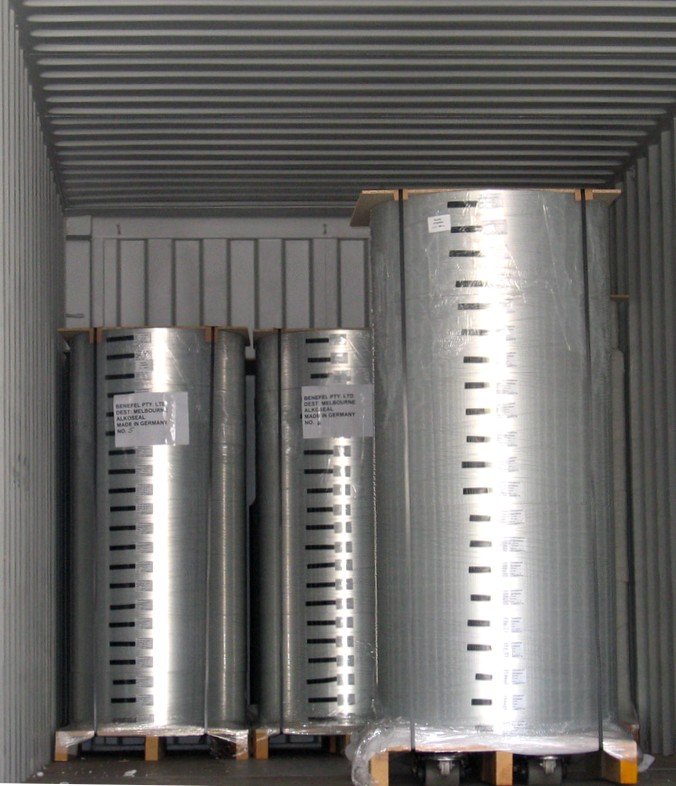

Precut Cap Liners
Because we supply the “big boys” with cap lining material we know our field and we utilize piggy-back productions and stock rolls to be able to service large and small clients alike.

1.0 Valued Clients with Small Scale Cap Liner Requirements:
For the contract Manufacturer, Cosmetics Company, Boutique and Cottage Food Industries, Spices and Small Enterprises, the use of induction liners can give a big boost to their product image and integrity. Finding caps with the liners you need can be difficult or not yet available in the smaller quantities you are dealing with. Loose packed pre-cut liners can be supplied with very short notice; within 2-3 weeks and sometimes much faster. We are at the concluding stages of developing IP that will see lead times fall to well within one week. We use methods that enable cutting tools to be produced for hundreds of dollars rather than thousands of dollars so if your size is unique do not worry.
2.0 Larger Scale requirements and working with Cap manufacturers:
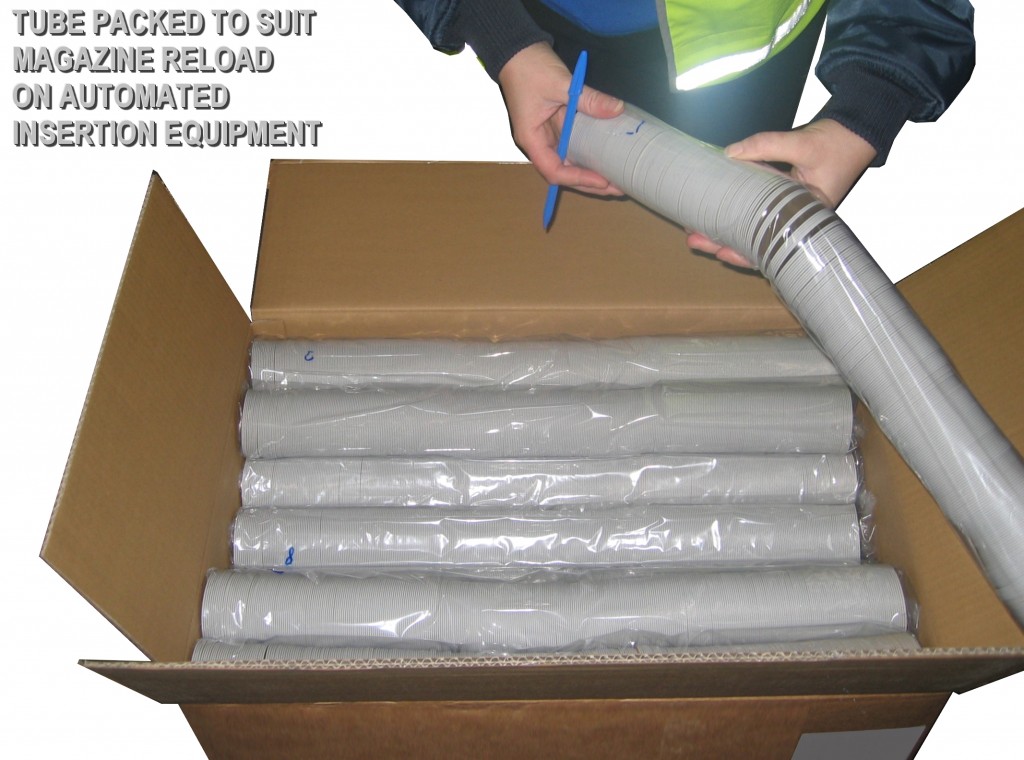
We are introducing tube packed pre-cut liners as an alternative to the more traditional roll form supply of cap lining material.
2.1 Small Scale Cap Liners
Tube packed pre-cut liners are introduced for the small scale and pilot projects as it solves labor considerations and can be combined with cost effective budget liner-insertion-machines.
2.2 Large Scale Cap Lining
In a kind of paradox, the very large scale projects are often best served with pre-cut tube packed liners. The liner inserting equipment is of a much higher sophistication level but the pay-off comes in the better material yield, the elimination of maintaining knifes and dies, the elimination of dust and particle consideration, the more efficient shipping costs for the lining material and the elimination of disposal consideration for the waste generated from cutting from roll form stock. Behind the scene of pre-cut supply, the more savvy pre-cut liner manufacturers also have scavenging and recycling techniques in line with their pre-cut operations to make use of the offcuts generated and this results in a cleaner environmental footprint for this format of cap lining material.
2.3 Innovative Pre-cut Cap Lining Options
We also supply pre-cut liners with innovations that are quite unique and specific to the pre-cut format. Liners with backing having built in pull tabs often require a pre-cut format of cap lining material.

SealerOn™ Induction Sealing Machines
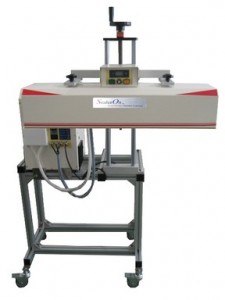
We believe there is no better value Basic Induction Sealing Equipment on the market today.
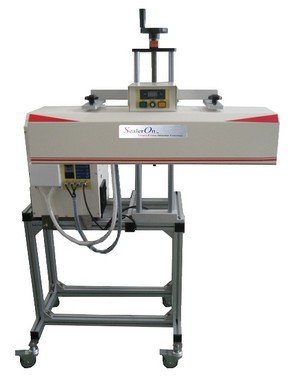
The SealerOn™ Basic Induction Machine range is offered to achieve Optimal:
- Machine Value
- Entry Level Induction Sealing
- Reliability
- European Compliance (safe) Equipment
SealerOn™ Basic Induction Sealing Machine Features incorporated into this range include:
- Air Cooled
- Simple Controls
- Semi-Automatic Induction Sealing Option
- Capless Semi-Automatic Induction Sealing Option
- Mid Level Automatic Induction Sealing Option
- Emergency Stop on Mid Level Unit
Liner Insertion Machines
Whatever your project and whatever its scale we are able to apply our experience and range of equipment and materials available to become your partner in the supply of Liner Insertion Machines.
MeRo Induction Sealing Machines
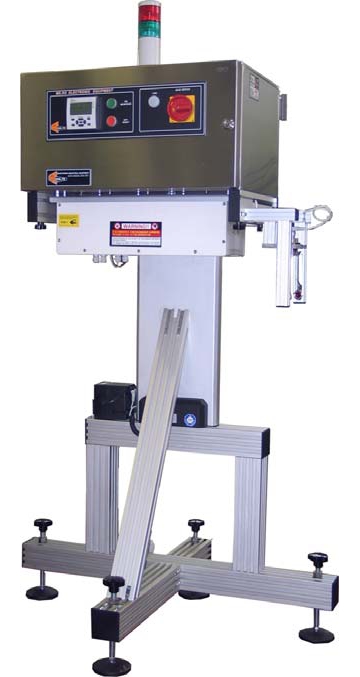
We believe there is no better value medium priced “High End” Induction Sealing Equipment. There are unique features to allow process validation and adjustable width sealing head tunnels are available.
 MeRo Induction Systems feature:
- An Air cooled system (Absolutely no need to water cool the induction head).
- Compact construction for easy integration into the filling line.
- High power efficiency thanks to the configuration of the power circuits and the use of IGBT modules.
- Sinusoidal output waveform (Not Square or chopped).
- Constant and Precise Output power due to the configuration of the regulation circuits.
- Easy to use controls that display operating parameters and alarm signals.
- Remote control Start-Stop interface.
- Power variation monitor which can be set by the user to activate an alarm.
- Manufactured in accordance with EN-60204-1 standards, Electromagnetic (EMC) compatibility in accordance with EN-5511 and EN50082-2 standards.
- Motorized height adjustment
- Set-Up Validation providing an Energy absorbed reading- A key advantage over Nearly Every other make
Depending on the range of product and cap/lid/closure shapes, different sealing heads can be supplied.
Options include:
- Missing Foil Detection with Bottle Eject Mechanism or Signal
- Bottle Accumulation Detection to avoid the situation where bottles are stalled under the active sealing head.
- Pressurized Cabinet version to work in dangerous areas.
- Fieldbus connection to the production process ASI/PROFIBUS/CAM OPEN/DEVICE NET
- Integration of power regulation proportional to the speed of the conveyor via feedback from your existing conveyor’s speed controller. This is another key advantage that MeRo are able to offer over nearly other make.
Induction Material Liner
Material Liner is what we call that piece (or pieces) of what looks like paper inside product caps. It is also referred to as induction foil, induction sealing material, foil seals and induction seals among others. Many people are unaware of the purpose they serve to the product aside from being a protection seal or a tamper proof seal.
Material Liner Purpose
Material liner within caps can be one piece or two pieces depending on the expected purpose of the lining material.
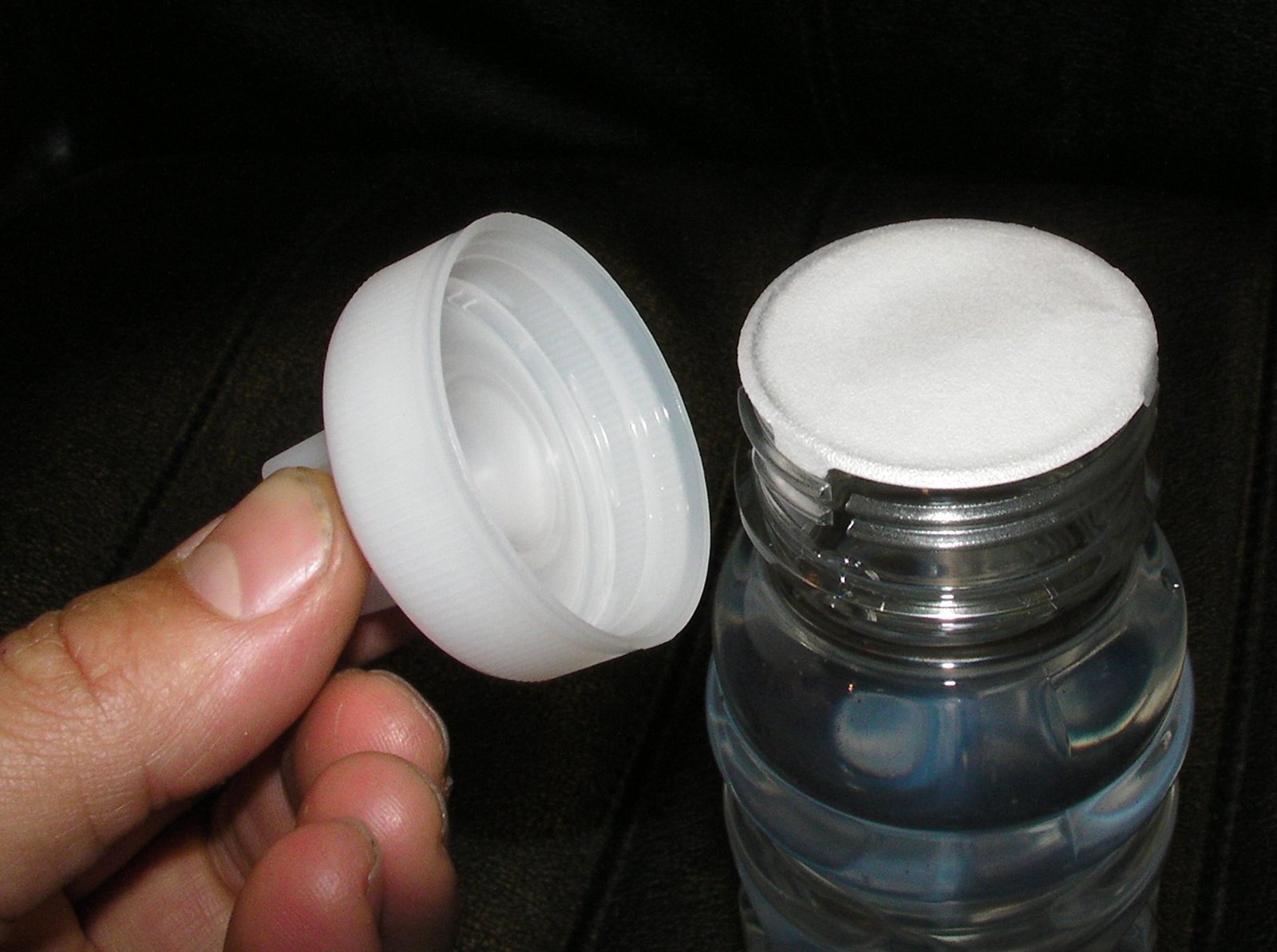 Single piece cap liners are often present in smaller sized containers in which the product is likely to be consumed after opening. Its packaging is regarded as being one time use packaging. In this instance, the liner functions as protection until the product is opened. No other material is left inside the cap.
 Larger packs or bottled items are not likely to be completely consumed right after opening. The consumer is more anticipated to reclose the container and store the product. The caps used on these conditions have demands for caps that reseals effectively. Upon close examination, the caps used on these kinds of merchandise have laminated foam within. This lamination enables the cap to reseal the container upon closing to maintain product freshness. The laminations within the cap as well as the removed tamper evident seal on the product are referred to as two-piece cap liners.
Deciding on the best components and structure of your foil seal is essential to guarantee the proper amount of protection for your merchandise. We can help you in selecting the type of material as well as the construction suitable to your application.
We have induction sealing materials available in many variants to fulfil almost any standard or individualized product packaging requirement which are safe and meet the strict specifications set by the Food and Drugs Authority.
Effective for products that must be kept free from contamination, oxidation and moisture, tamper evident hermetic seals are best suited for use in the following production:
- Food & Beverage
- Drugs
- Alkalies
- Acids
- Oils
- Organic solvents and products
- Flammables,
- Powders
- Pellets
- Other products
Induction foils are generally supplied to the closure manufacturers. Developed over 35 years ago, induction sealing, in the beginning, was designed to eliminate leakage of chemicals from plastic bottle caps. At present, this method works extremely well with most style container and closure.
Induction Sealing Process
The caps are supplied with an induction foil waiting to load into the capper. The container is then filled and capped, using the caps that are pre-lined with the induction foils.
The capped container is then transported down the conveyor line and travels underneath the induction sealing head. The electromagnetic field generated by the sealing head penetrates the cap and the aluminum foil layer. When the field permeates the foil, it causes an electrical current which melts the liner’s sealing film. The foil cools down as it leaves the induction field causing the heat seal film bond to the container. Once the cap is removed, the aluminum foil remains bonded to the lip of the container.
You can trust our team of experts to provide you the best solution to your application requirement. Contact us today!
Induction Sealing
Caps with Liners
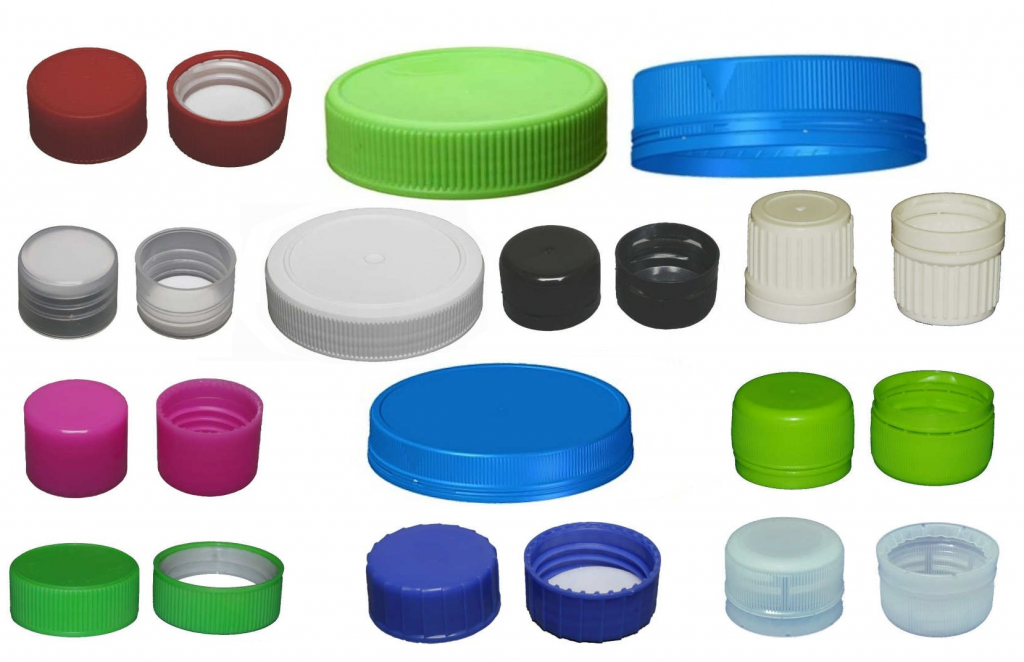
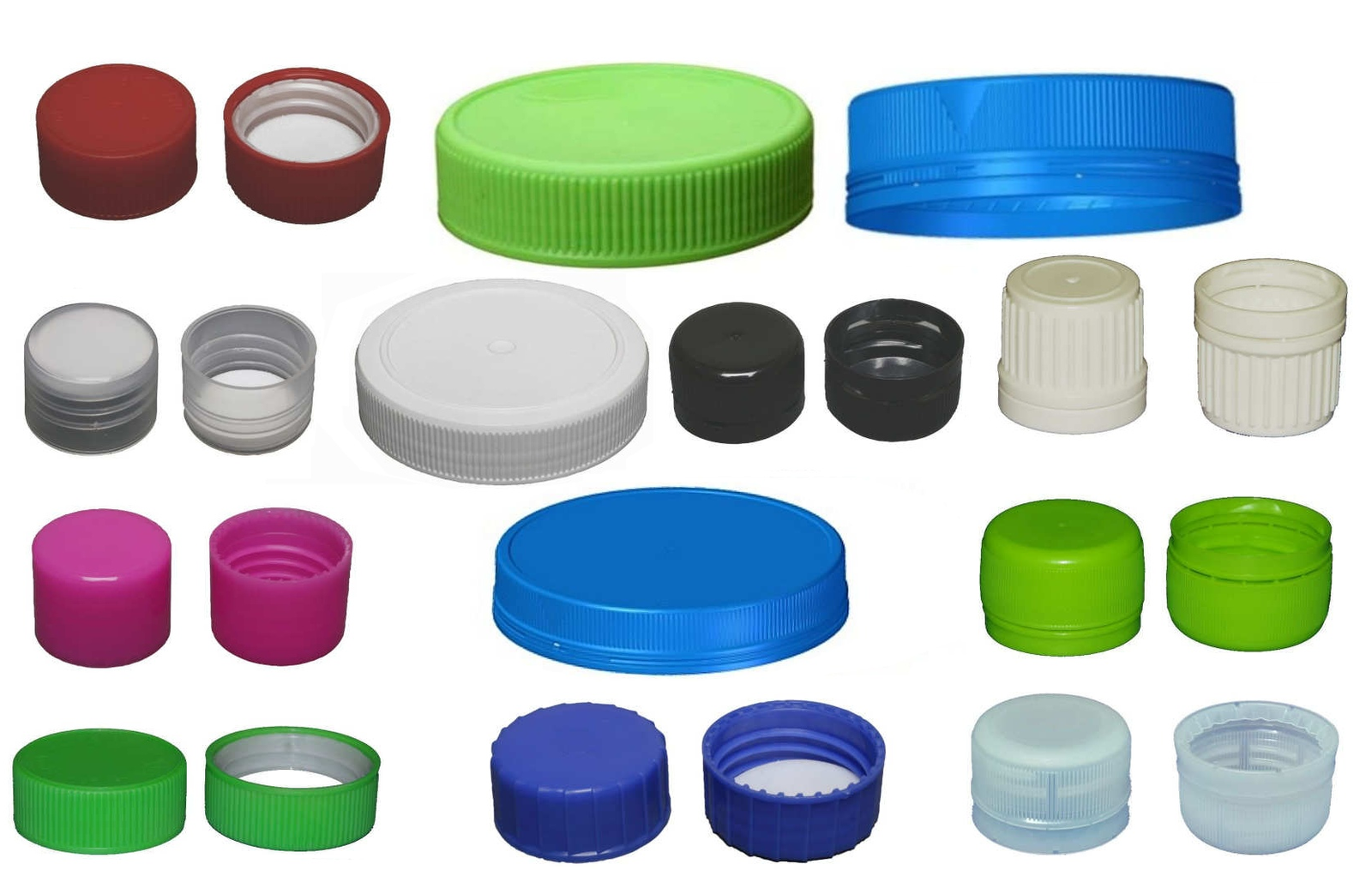
Caps and Closures
As we deal with so many cap manufacturers we are able to source and supply you with the cap and cap lining material combination you are looking for without the need to separately supply you with cap lining material. The caps are supplied from cap manufacturers for whom we have an established trading relationship.
These cap manufacturers will almost always sell through third parties and we have qualified with many cap manufacturers to be that third party. We insure the pricing we supply is equal to or better than if you had gone to other third parties or EVEN the cap manufacturer themselves.
Our knowledge and involvement in the supply of Cap Lining Material, Lining Inserting equipment for the cap manufacturers and induction sealing equipment for the end user means we can help source “get-it right first time” combinations of caps with cap lining material and supply at very competitive pricing.

Heat Sealing Versus Induction Sealing
What is the difference between a heat sealing machine and an induction sealing machine? This paper examines the difference in the case of an automated line.
Often, clients new to packaging approach Benefel asking for heat sealing equipment to seal their product without realising that this older, less sophisticated method of sealing a product is not what they really want. In terms of machine versatility, pricing, safety and set up nearly all these clients are better served using induction seal machinery.
Below are some key differences in the sealing machinery and sealing process:
Heat sealing machinery disadvantages:
- Products are sealed without their cap or lid in place.
- Product handling is more complicated when automated as the products need to be transported, without spillage, in the sealing machine using cups or turrets in open containers.
- Machinery is more dedicated to specific sizes of containers, given the complexity of transporting open containers.
- Versatility of heat sealing machinery is limited and requires significant change parts if a different size or shape container is to be sealed using the same machine.
- There is a physical source of heat that comes into contact with the container to melt the seal in place.
- The machinery is often rotary in nature increasing the size and cost of equipment compared to induction sealing machinery.
- The process cannot be started instantly as the physical sealing heat required needs the sealing element(s) to reach temperature.
- Physical handling of the product means the machine has many more service and set up issues compared to the induction sealing process where there is no physical contact.
- Heat sealing requires a larger sealing surface to work well; for instance if you look at a Yoghurt tub you will see the packaging is designed with a turned out flat rim to accept the heat sealing foil.
Heat sealing machine advantages:
- The sealing material per unit is usually less than induction sealing material.
- Products can be sealed without a lid or cap. Note there are Capless induction sealing machines but they are not so common and are usually more expensive.
- You can visually inspect each seal as there is no cap or lid covering the seal during the sealing process.
- Very low cost plastic seals (without a metal foil layer) can be used. This is a big advantage when the primary reasons for sealing do not include moisture and oxygen barrier requirements.
- Larger diameter jobs beyond 70mm will use a large amount of sealing material per item and hence the availability of lower cost sealing films becomes a more significant advantage for heat sealing.
To list the induction machine advantages and disadvantages would be to simply reverse the above mentioned factors. Nevertheless the benefits of induction sealing can be summarised below:
- Induction machines have a smaller machine foot print
- Induction machines are lower priced
- Induction machines do not need to touch or handle the product
- Induction machines are simpler and safer to operate having no physical source of heat
- Induction machines are versatile and can handle many different shapes and sizes of containers.
- Induction machines can be powered on and ready for production nearly instantly.
- Induction machines are much faster to adjust and set up for different jobs.
- Induction machines are far easier to move from one production line to another as they can simply be wheeled into place over an existing section of conveyor.
There are companies that are dedicated to converting old heat sealing machines over to induction sealing machines, whereas the reverse case does not exist pointing to the generally accepted opinion that when you need to seal a Jar or bottle the most likely method will be with an induction seal.
There is still a place for heat sealing usually limited to applications where the sealing diameter is more than 70mm and the volumes of the same size product are very large and changeover of sizes and shapes is not required. The other main application for heat sealing will be where the product has no lid or cover and the sealing film is what is relied upon to complete the package.