What are Cap Liners and What Function Do They Serve?

Cap Liners

Often found yet still rarely realized, inside of many high quality container caps is a material that was placed into the cap prior to the cap being applied on the container or jar.

Sometimes, the end user discover this material.They ask themselves what is the goal of that seal and just how was it put in place? To the astonishment of many, that security seal or freshness seal was put in place with the aid of the cap or lid itself.

Single Piece and two Piece Cap Liners

Individual Piece Cap Liners

Several bottled goods are smaller packs where their contents are required being consumed or used as soon as they are opened. The buyer is not

Cap Liners
Cap Liners

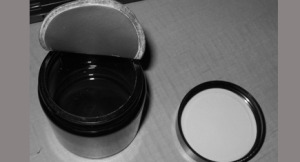
anticipated to reclose this product or keep product within the container and this kind of product packaging is referred to as one time use packaging. The expected purpose of the lining material or sealing material, in such cases, would be to provide tamper evidence as a protection up until it is opened up. Induction sealing is realized with the aid of single piece materials welded to the peak rim of the jar. Any time you open up a product like this you will observe the aluminium foil across the top of the bottle and when you look into the cap or lid there will not be any other material left from the cap.

2 Piece Cap Liners

Other bottled products and bigger packs usually are not likely to be totally consumed once they are opened. The end user of the product is quite likely going to reclose and store the bottle or container, and thus there is a requirement for a cap the reseals effectively.

As soon as the induction seal has been taken away, there really should still be a material that could result in “friction seal” after the package is closed again. Normally, this is achieved with compressible laminated foam that is around 1 to 2 mm thick.

The soft quality of the foam permit compression as the cap or lid is tightened on the bottle or container. This offers the sort of friction fit tightness which can be kept regardless if the cap or lid is not screwed to its highest possible pressure. Although it is not as effective as a heat induction welded foil, the foam cap inserts supply a resealable seal, permitting the cap or lid can be removed and then replaced and tightened to create a high integrity seal.

Larger sized juice bottles frequently have both a foil lining material and a independent foam lining material. Freshness assurance is justified by the foil while the foam liner provide the resealable capability. For the duration of heat sealing process, the foam element ensures even contact of the foil layer.

When the bottle caps turn loosened while transporting or expand and contract due to temperature or perhaps failed to properly apply, in any case the merchandise integrity and packaging is damaged. With the application of the foil seal on the top of the container, spillage and spoilage are a uncommon occurrence regardless if the caps become loose.
Packaging in Glass or PET When Considering Induction Seal

Often there are clients packaging a “pure” product which they are packaging in Glass.

The problem they face is that they are having leaking issues and also want some tamper evidence or freshness seal.  In the case of dry products like capsules or powders there are some good options.  Take for example coffee which is often packed in glass and has a foil freshness heat seal across the opening of the Jar.

In the case of wet and oily products the Induction Sealing option is not available.  The heat sealing process in induction sealing relies on a layer of material laminated to the foil becoming “wet” when it is heated and then setting or drying when the foil cools down.  In the case of plastics bottles this sealing layer is usually a plastic based sealing layer that “melts” into the existing plastic of the container.  For glass with very high melt temperatures the sealing layer never gets anywhere near hot enough to “melt” into the glass so this sealing layer is usually adhesive based.  Wet products and oily products tend to seep into this seal after the sealing process, eventually weakening or neutralising the adhesive and breaking the seal.

Another hurdle to get past with glass jars is that more often than not they are designed or supplied with metal caps.  The induction sealing process relies on an uninterrupted magnetic field to work on the foil layer of an induction seal to heat that seal.  Metal caps or closures interrupt the seal and the metal cap tends to absorb the heat sealing energy before the induction material receives this energy.

Induction SealWhile often it is environmental or health based products packed into glass, ironically these manufactures are making a much larger impact on the environment in using glass packaging than their counterparts using PET packaging.

We will not enter into the argument about whether Glass or Plastic is best to package products but rather we will focus on the limitations lifted on induction sealing when using plastic packaging with plastic lids.

There are many products that transition from glass to plastic and are using plastic packs that look like glass yet still have metal lids.  These products can be induction sealed using Capless induction sealing.  This is a process where the open filled product passed under a sealing head that first cuts a disc of sealing foil, locates that sealing foil over the products opening and then heat seals that foil to the container.  After this sealing machine process the package has its metal cap put in place.

More recently plastic packs that look like glass packs are now having screw on sections enabling the development and application of plastic caps.  It is the combination of a plastic bottle and a plastic cap that best lend themselves to the induction sealing machine process.

For the pure products market that simply must have their product in glass ,not all hope is lost for induction sealing as development of adhesives for the induction sealing layer that are suitable for glass and resistant to wet and oily products is still taking place.  There are definitely some glass sealing foils that perform better than others and the best way to know if your product will suit will be via trials.  The longer you can conduct your trials and the more varied conditions, such as temperature ranges and pressure ranges the more certain you can be that the induction sealing process is suited to your application.

What Shape Sealing Head is Best on an Induction Sealers?

Induction Sealers

To understand this question of the sealing head shape we must first understand how an induction seal is achieved. 

The sealing head is the part of the machine that is placed over the path of the product cap/lid.  Within the sealing head is usually long oval shaped coils of thick wire that carry high current that changes direction many thousands of times a second.  This creates a magnetic field at right angles to the coil that also changes direction many thousands of times a second.  The magnetic field can travel through air and plastic but it does get weaker as it travels away from the coils that generated the magnetic field.  When the magnetic field comes across metal, it will act to generate current in the metal.


Induction Machine Sealing Head

In the case of the heat sealing machine, it waits for a product that has a metal laminated foil in its cap.  The magnetic field from the sealing head acts to generate current in the laminated foil and the laminated foil gets hot.  Laminated to the foil is a layer that will melt or become “wet” with heat.  When the product has completely passed from under the induction machine the foil will begin to cool and the layer that became “wet” will set to bond the laminated foil across the opening of the product.

From the above “theory” it can be understood that the sealing of a bottle or product using induction machines will depend on how long the product is under the magnetic field and how close it gets to that origins of the magnetic field.

There are two distinct shapes of sealing heads for cap sealers being Flat profile and Tunnel profile sealing heads.

The Flat profile sealing head is suitable for “Standard Flat Caps” . A “Flat Cap”, generally speaking, refers to a cap where the plane of the induction liner is within 4.0 mm of the plane of the Cap’s top surface.

The Tunnel profile sealing head is suitable for “Specialty Caps”. A Tunnel Induction Sealing Head lets you seal caps where the foil sits a distance greater than say 4 mm from the top surface of the cap; this is often the case with twist top spouts, flip top lids, sports drink caps, sipper caps or shaker caps.

The Tunnel sealing head concentrates the magnetic field to an area within the tunnel profile and hence provides stronger magnetic fields over a generally smaller width path for the products passing underneath.  A Tunnel sealing head also allows the coils within the sealing head to have a path lower than the top of the product caps.  This brings the magnetic field closer to the plane of the foil within “specialty caps”.  The drawback to this Tunnel profile sealing head is that it is usually not very good for large caps and it does limit the range of cap sizes that can be efficiently sealed.  There is a small exception to this rule with the MeRo™ brand induction sealer with an adjustable width tunnel profile.  This machine can typically cater for a range of specialty caps with an adjustment of 30mm which would mean a typical cap diameter range of 30mm to 60mm could be very efficiently sealed.

Efficient cap sealing means that less time is needed under the sealing head and hence higher production speed is possible.

A Flat profile sealing head will allow for a greater range of cap sizes and even allows for that Sealing head to be placed at an angle across the product’s path to achieve sealing of cap diameters that are even wider than the coil winding pattern within the sealing head.  It is quite possible to have a Flat profile sealing head that can seal caps from 30mm to 110mm wide.  The trade-off for the versatility of this profile sealing head on a heat sealing head is lower speed throughput and an inability to seal specialty caps.

Line Patrolman™ Unique Process Validation Tool for Induction Sealing

As a result of many unknown variables which may significantly impact sealing results of an induction machine, an induction sealing process validation is highly advised.

The sealing machine could be bumped on a small angle, a slight height adjustment might have been made, large bottle height variations, and conveyor speed variations can all drastically impact the induction sealing results.

Visual Inspections Process Validation for Induction Sealing

For properly trained operators, this process can be the best of all; in particular when they are competent exactly how induction foils look like when they have obtained the precise conditions for a good seal.

Some things to look for include:

a)    A Concentric heat pattern in the foil; when you hold the foil to some light source with the accurate position you should observe a smaller sized circle where material was not heat affected. This implies the seal has heated externally then inwards in an even pattern; therefore a good seal.

b)    Overheating – there are numerous of aspects to point out if there have been overheating including visual discolouration of one or more layers of the induction foil, bubbling or creasing, a flattening of the bottle neck, melting of a backing resealing foam (if there are any).

c)     Unequal heat sealing; associated in some ways to (a) above; a foil can look nicely sealed but an unequal heat seal can result in aspects of the seal being too tightly “welded” or very lightly welded and more likely to “pop loose with some pressure on the side walls of the bottle/container.

So long as you have operators in each shift that happen to be properly trained in the above areas to consider, then the “subjectivity” of a visual process validation is reduced and the validation will hold more benefit.

2.0 Basic version – Linepatrolman™ Process Validation for Induction Sealing

Should you have doubts that you’re going to always have operators properly trained or experienced enough to cover what exactly is required for a

Line Patrolman™ Process Validation for Induction Sealing

reliable visual process of validation for induction sealing then there is the straightforward option of a Linepatrolman™ which has no additional controls than a reset button.

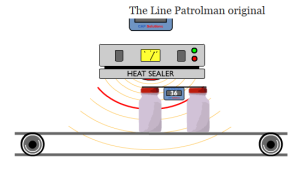
This unit needs absolutely no programming and simply provides an built-in count of the energy seen by the testing cell moving about the same path as the products.

The Benefel site has a good animation of the Linepatrolman

In this animation, the count gets up to “50”. If that reading worked for the last batch and was verified being a good reading by a very comprehensive visual assessment (as well as some leak screening), operators would look to obtain equivalent readings in next production runs of the same product.

Many organisations need an induction sealing measurement since the whole process is a time and position dependent. When there is speed variance as the product passes through the induction machine the outcome is likewise different. For an operator a 10% alteration of the speed of a product conveyor may not be found. To an operator a 1mm height adjustment of the sealing head most likely is not noticed or a 5 degree angle difference in guide rails could possibly be missed. The induction sealing setting on the induction sealing machine may not have changed at all, but the sealing effects would have changed considerably!

The Line Patrolman™ is a unique process validation device that can pick up changes in energy transfer in what may seem like an identical set-up to the last time an induction machine has been operated. This eliminates guess work on the energy transfer and give confidence that the machine is set to the ideal settings.

The Poor Man’s Tamper Evident Seal – Pressure Sensitive Cap Sealing

Tamper Evident Seal

When looking into whether to use a pressure sensitive tamper evident seal or an induction seal it is a good idea to understand the core reasons behind applying tamper evident seals and induction seals to bottles and jars. 

For induction sealing the key benefits from that type of seal include:  Tamper Evident Seal

  1. A visual tamper proof barrier showing the client the contents of this product have not been compromised.
  2. An oxygen and moisture barrier, preserving the integrity and shelf life of products.  For this reason alone induction seals are often referred to as freshness seals.
  3. Eliminate leaks through caps.  Often plastic caps are well tightened after their bottle has been filled, however temperature changes resulting in slight cap expansion and contraction and the vibration of transport result in caps loosening and product leaking, Eg. Often compromising significant portions of product shipment that become very difficult to retail if not impossible.
  4. To provide a professional finish to the product showing the manufacturer cares about the above three major benefits of good product sealing.

For pressure sensitive sealing – sometimes called PS22 Wadding the key benefits from that type of seal are reduced:

  1. A visual tamper evident barrier showing the client the contents of this product have probably not been compromised
  2. To provide a professional finish that resembles the level of care used by manufacturers using induction sealing.

Pressure sensitive wadding is susceptible to someone that can come along and carefully peel such a liner partially off the neck of a bottle and then simply tighten the cap again to apply pressure and re-seal the bottle; no equipment or tools is required. In this way bottle sealing with pressure sensitive cap sealing is more visual than practical. 

Pressure sensitive cap lining material usually has no foil barrier and therefore has little to no barrier properties to lengthen shelf life or preserve freshness.  Being glue based, many liquid contents are not suitable for pressure sensitive or PS22 cap sealing.

So why do companies choose pressure sensitive sealing materials over induction foil sealing?

In some cases it is ignorance of the induction sealing process and in other cases it is the “poor man’s” version of a tamper evident seal. 

Induction sealing tamper evidence requires induction sealing machinery.  Pressure sensitive sealing requires no machinery.

Safe bench top induction machinery can start at USD$3500.00.  Beware there are many hand held induction machines on offer for sub USD$1000 and manufacturers of that level of equipment refuse to provide safety certifications or advise that they do not “yet” have the certification.

An induction machine is not like a toaster or a kettle so beware of anyone offering toaster or kettle prices for induction sealing equipment.  An induction machine deals with high currents and produces high levels of magnetic and electrical fields. 

If you find a retail product on the shelf with a pressure sensitive seal be aware that while it looks like it is tamper proof it is at best only ‘tamper evident’.  The company producing that product is taking the cheapest path to providing you with a look that resembles but in no way performs like an induction seal or a tamper proof seal.

Induction Sealing Bottles with Specialty Caps

Induction Sealing

A Tunnel Induction Sealing Head lets you seal caps where the foil sits a distance greater than say 4 mm from the top surface of the cap; This is often the case with twist top spouts, flip top lids, sports drink caps, sipper caps or shaker caps.

Induction sealing is a process where a coil in the shape of an elongated loop is used to generate a fast oscillating high magnetic field. This magnetic field can change poles as many as 100,000 times every second.

The magnetic field can travel through air and plastic. When the magnetic field meets a metal surface, the magnetic field “induces” a high oscillating current in that metal surface in a plane that is parallel to the coils that generated the magnetic field.

A magnetic field generated from a “point” dissipates with the cube of its distance from that point.

In general, the magnetic field of an induction sealing machine needs to be within 5mm or ¼ inch from the sealing foil to obtain meaningful production speeds.

There are a large range of caps that do not fit the standard flat top profile and present a problem to bring the magnetic field of the heat sealing equipment to within 5mm or ¼ inch from the sealing foil.

These specialty caps need an adaption from a standard flat coil sealing head to a tunnel sealing head. The Coils are shaped to pass around the tunnel. The tunnel allows the protruding feature of the specialty caps to pass through the machine without lifting the plane of the magnetic field further away from the sealing foil within the bottle cap.

On the SealerOn website there is a youtube icon that will link you to videos showing SealerOn™ heat sealing or more accurately induction heat sealing using a tunnel sealing head.

Induction Sealing
Induction Sealing

The SealerOn™500 fitted with a sealing tunnel is capable of sealing at sealing speed up to 10 Meters per Minutes or 30 Feet per Minute depending on the cap and foil combination.

For faster induction sealing there is the MeRo adjustable tunnel sealing machines. These machines have the added and unique feature of having an adjustable width sealing head. Having an adjustable width enables higher concentrating and focussing of the induction field allowing for higher speed sealing. A MeRo 2Kw unit is capable of sealing at sealing speed up to 30 Meters per Minutes or 90 Feet per Minute depending on the cap and foil combination.

Efficient cap sealing means that less time is needed under the sealing head and hence higher production speed is possible.

A Flat profile sealing head will allow for a greater range of cap sizes and even allows for that Sealing head to be placed at an angle across the product’s path to achieve sealing of cap diameters that are even wider than the coil winding pattern within the sealing head. It is quite possible to have a Flat profile sealing head that can seal caps from 30mm to 110mm wide. The trade-off for the versatility of this profile sealing head on a heat sealing head is lower speed throughput and an inability to seal specialty caps.


Safe, Affordable, Handheld or Bench Top Induction Sealing Machine

Following frequent inquiries from smaller businesses, some start up companies, and testing labs looking for a reasonably priced induction machine, we have decided to make available a safe and affordable induction sealing unit.

Smaller businesses have low budgets in mind, but it doesn’t mean that they are ready to compromise machine safety and the integrity of their products.  Regrettably, there are not too many good options available in the market.  The majority of low cost induction sealing units do not present CE safety certification for LV and EMF.

Induction Machine CE Safety Certification for LV and EMF

The CE mark should be applied in order to legitimately market electrical and electronic products in the European Union (EU), but only after you have proven compliance with all applicable directives.  Compliance is established by testing the applicable harmonized standards for the safety of electrical and electronic products in relation to the effects of electromagnetic fields (EMF) and EMC on the functional safety of equipment. CE marking requirements now include compliance with electromagnetic field and electromagnetic compatibility standards. Manufacturers must ensure that products already on the market comply. This is precisely the reason why almost all other low cost induction sealing units do not have this CE safety certification.

Safe Induction Machine Option

The conception of SealerOn100™ was brought about by this need to supply the market with a machine that is certified safe and efficient. Induction machines generate high current and high electromagnetic field to accomplish their tasks. The birth of SealerOn™-100 has filled a gap in the SealerOn™ range that has provided a dependable solution to higher throughput equipment our clients are familiar with and put their trust in.

Immediately after its initial launch, we were flooded by a large number of inquiries. The unit is fully serviceable and it is fashioned to have its main electronics replaced in under 5 minutes!  Watch our video:


How Induction Sealing Takes Place

Induction sealing is a straightforward and simple process but an efficient way to seal bottles. The filling machines fill the bottles and are capped at some point.  The plastic cap has an aluminium foil liner inside.  Once the capped bottle passes under the induction sealing machine, which transmits electromagnetic energy to the foil liner, the liner becomes hot and welds itself to the neck of the container which remains in place even when the cap is removed.  The aluminium foil provides a tight seal that helps  prevent leakage, provides tamper evidence and can improve the shelf life of the product.

For small production run of sealing a few hundred units a day, SealerOn™-100 is a good solution.  Highly recommended for:

  • smaller or start-ups businesses looking to introduce a new product in the market
  • ideal for laboratory testing and applications
  • a low cost backup measure for higher end induction equipment

When you have time to properly align the sealing head visually, the SealerOn™-100 can be supplied with just a sealing head or wand. To insure a steady and even sealing, it is essential that the sealing head is level and well centered. The option of a stand to hold the sealing head and a locating bracket that aligns the product under the sealing head is made available to eliminate alignment errors.

We are proud of our SealerOn™ range of induction sealing equipment that performs reliably, safely and are easily serviced. We are delighted to be able to present a realistic and safe alternative for those in need of low budget, bench top or hand held induction sealing machine.

Filling Machine and Heat Sealing Machine Turnkey Packaging Line

Below is an example of a Turnkey solution for filling and packing creamed honey.

A three Lane Piston Filler and Heat Sealing machine was combined for packing creamed honey.

 Watch our Filler and Heat Sealer Machine in action:


Fully Automated Filling Machine Features

  1. The machine feeds empty tubs into three lanes of an indexing (Start-Stop) conveyor on the machine.
  2. PLCs of the Filler and Heat Sealer talk to each other to time when filling takes place.
  3. Sensors on the Machine check that tubs are loaded properly and that tubs are present when they are under the filling stations.
  4. An accurate three head piston filler fills the tubs.
Heat Sealing Machine Process
  1. The Filled Tubs are indexed to underneath a Heat Sealing Station.
  2. Heat Sealing Foil has been indexed into place above the tubs and infront of a cutting and sealing mould. The mould has heating elements carefully temperature controlled and the mould descends to press the film onto the tubs.
  3. The Sealed Tubs are then indexed underneath the Lid Denester.
  4. A rotating Cylinder and suction cups take 3 lids from the bottom of the lid stacks and rotate to gently place the lids on top of the sealed tubs. At this stage the lids are not firmly pressed into place.
  5. ‎The tubs with loosely fitted lids are indexed under a pressing station to firmly place the lids into place.
  6. A roller after this stage is the final assurance measure to make sure the lids are pressed firmly into place.
  7. ‎Finally, the filled tubs with lids are lifted from the conveyor where they are positively slid onto an awaiting finished product conveyor.
Filling and Sealing Machine Speed

The filling and sealing Speed of this three lane system is designed for up to 40 Tubs per minute. Less viscous product could be filled faster. Higher speeds are of course possible with wider equipment fitted with more lanes.

Our SealerOn fully automatic filler and heat sealer equipment calls for minimal operator intervention. Normally, operators only need re-supply packaging components simply by loading supply hoppers and also taking away completed cartons.

Be among our satisfied clients around the globe who are proud owners of SealerOn brand production machinery.  Contact us today for your production requirements.

MeRo 2KW Air Cooled Induction Sealer

Induction Sealer

The MeRo 2KW Air Cooled unit is a reliable workhorse with standard features that many quote as confusingly priced options. It is what we call the medium priced high end machine.

The machine has a Motorised Height Adjustment, Missing Foil Detection, and Bottle Accumulation Detection. It also has an energy trasnferred reading for process validation.  This  unit can be supplied with a flat sealing head or an ADJUSTABLE WIDTH tunnel sealing head.

Really built in Europe(Italy); not simply assembled with Chinese circuit boards and parts and then sold as a western made machine.

The MeRo equipment comes from the MeRo family of power electronics that includes Coronatreater that go well beyond  75KW !!; so you can trust that you are dealing with equipment manufactured by a company that knows how to build and handle power electronics.

MeRo 2KW Air CooledMeRo Induction Sealer
MeRo ADJUSTABLE WIDTH Sealing Tunnel

Electrical and Mechanical Specifications*

Supply voltage 3×380 V. 50 Hz three-phase

  • MAXIMUM DRAWN POWER: 2,2 KVA
  • MAXIMUM OUTPUT POWER: 2 KW
  • WORKING FREQUENCY:30 – 50kHz
  • AMBIENT TEMPERATURE : 0°C..+40°C (-25°..+70° transport) (-25°..+55° storage)
  • RELATIVE HUMIDITY : <85%
  • PROTECTION : IP20 STANDARD
  • CERTIFICATION : EC (LOW VOLTAGE)
  • DIMENSIONS GENERATOR : Dimensions height 600mm, length 365mm, depth 460mm. Weight 55 Kg

*Subject to Change

Typical Application Configuration:

   Plastic Cap

CONVEYOR SPEED: up to 30 m/min;
FOIL SIZE:   35 mm;
CAP SIZE:    55 mm ext. diameter;
CAP STYLE:    flip top screw cap (see drawing);
BOTTLE MATERIAL:   Plastic

Exactly What Shape Sealing Head is Ideal on an Induction Sealing Machine?

To be able to understand what shape sealing head is the most suitable on an induction machine, we should learn first, precisely how induction sealing occurs.

The sealing head is the portion of the machine that is put over the path of the product cap or lid. Inside the sealing head is typically long oval shaped coils of thick wire that deliver high current that alters direction many thousands of times a second. The coil that contains a magnetic field is generated and in addition, adjust course several thousand times a second. The magnetic field will get weaker as it progresses away from the coil that made it to begin with nonetheless it is able to travel through air and plastic. Coming across metal, it will act to produce current.

Heat sealing machines function a little different. It is waiting for a product with metal laminated foil in its cap. The magnetic field from the sealing head acts to generate current in the laminated foil and the laminated foil gets hot. There is a layer that is laminated to the foil that turns wet with the heat or melts. When the product has completely passed from under the sealing machine, the foil will begin to cool and the layer that became “wet” will set to bond the laminated foil across the opening of the product.

It can be understood from the above principle that bottle or product sealing with the utilization of induction machines will rely on the time the product is under the magnetic field and how close it becomes to the origins of the magnetic field.

There are two distinct shapes of sealing heads for cap sealers being Flat profile and Tunnel profile sealing heads.

The Flat profile sealing head is suitable for “Standard Flat Caps”. A “Flat Cap”, typically speaking, means a cap where the plane of the induction liner is at 4.0 mm of the plane of the Cap’s top surface.

Tunnel Profile sealing head is best for “Specialty Caps“. Typically, the Tunnel Induction Sealing Head permits cap sealing in which the foil is located far than 4mm from the top surface of the cap; this is regular with twist top spouts, flip top lids, sports drink caps, sipper caps or shaker caps.

The magnetic field concentrates to a place inside the tunnel profile because of the tunnel sealing head thus delivers stronger magnetic fields over a generally smaller width route for the products moving below. A Tunnel sealing head also makes it possible for the coils inside the sealing head to have a route lower than the top of the product caps. This end in delivering the foil inside specialty caps closer to the magnetic field. The disadvantages of employing tunnel profile sealing head is the constrained array of cap dimensions it can efficiently seal and that it is not effective with big caps. MeRo™ brand induction sealer, nonetheless, is the exclusion to this concept. MeRo™ can, typically, cater for a range of specialty caps with an adjustment of 30mm and can seal cap diameter between 30mm to 60mm.

Better production speed is achievable where there is efficient cap sealing – less time beneath the sealing head.

Flat profile sealing head permit a larger selection of cap sizes and permits the sealing head to be positioned at an angle over the product’s route to obtain a sealing of cap diameters which are even greater than the coil winding pattern within the sealing head. Possibly a flat profile sealing head can seal caps from 30mm to 110mm wide. Decreased speed throughput along with the inabiility to seal specialty caps are the cons of this profile sealing head on a heat sealing head.